Epoxy Living Room Floors in Melbourne Homes
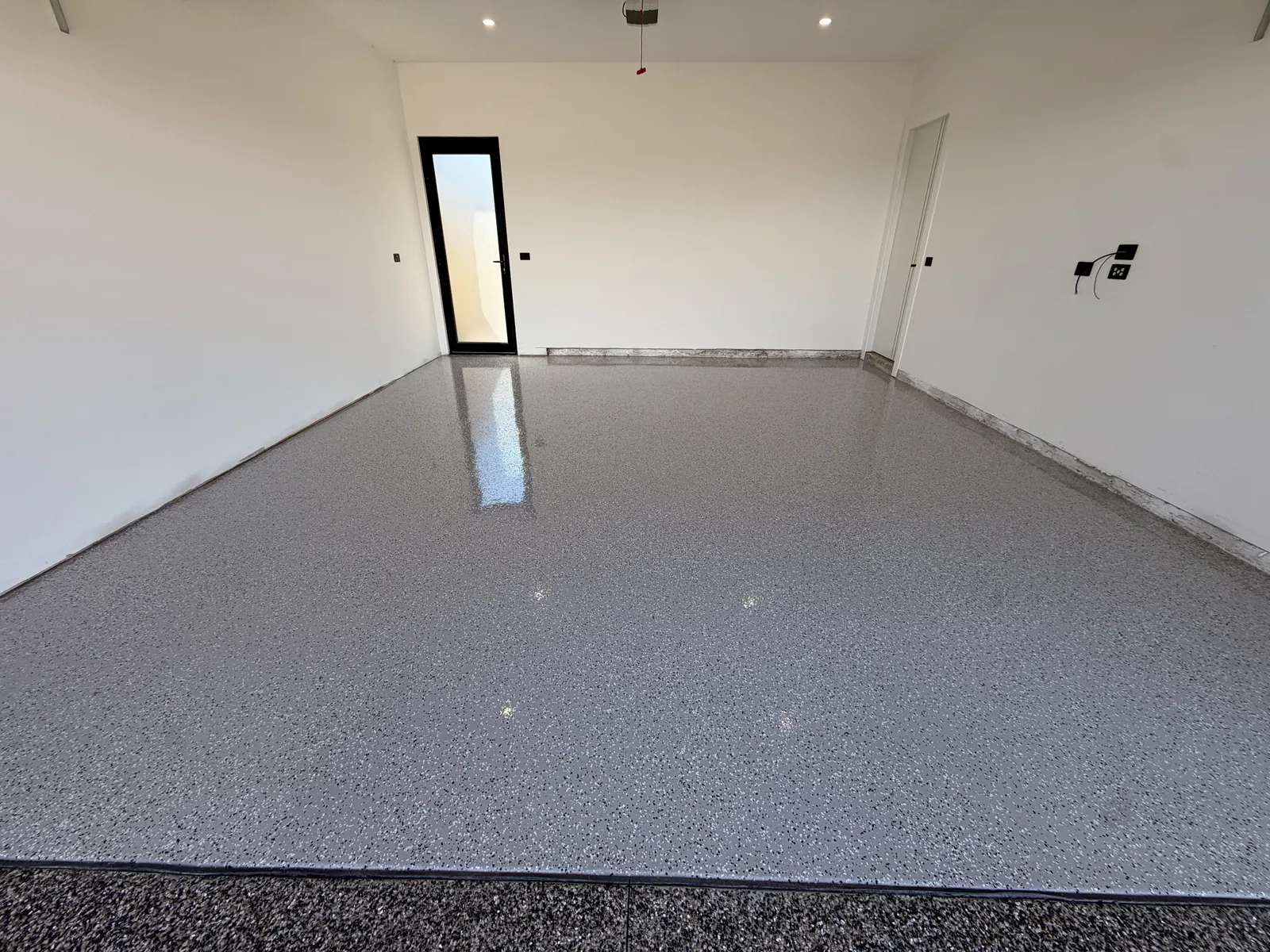
Epoxy has a reputation as a garage finish, but it also turns up in conversations about living rooms, open-plan areas and converted spaces. A resin floor can look calm and modern, it has no grout or board joins, and the same finish can run from a living area into a hallway or kitchen. It is also a hard floor on concrete, and it is not the right choice for every Melbourne home.
This guide covers the practical side of an epoxy living room floor: which rooms are suitable, how it feels to live with, and what to plan before you book.
Why consider epoxy in a living space
Homeowners usually come to this idea for one of three reasons. They like the look of a continuous, contemporary floor. They want the same finish they already have, or want, in an adjoining garage, kitchen or studio. Or they are renovating a concrete-slab home and do not want carpet, timber or tiles in that room.
A properly installed system can offer:
- a single, easy-to-clean surface with no grout lines
- decorative options, from quiet solid colours to flake blends and metallic movement
- a durable surface for family traffic, pets and furniture
- a consistent look through open-plan living, dining and kitchen areas
Our epoxy kitchen floors guide is the closest existing article if the living space joins a kitchen. This post focuses on the rooms you sit and walk in every day.
The slab still decides whether it is possible
Epoxy is designed for concrete. Many Melbourne living rooms sit on timber bearers and joists, especially in older houses. Timber moves. A hard resin coating does not like that movement, so a standard epoxy system is generally not suitable over timber.
If the living area is on a concrete slab, we still need to know what is on it now: carpet and adhesive, tiles, floating floors, old patch repairs or a painted surface. Those finishes are usually removed so the concrete can be diamond ground and checked for moisture. The same preparation principles we use in garages apply here, including the moisture advice in our moisture testing guide.
Converted garages, rumpus rooms and new extensions are often straightforward, because the slab is already the floor structure. Period homes with mixed levels and timber rooms usually are not, at least not throughout the house. We will tell you if only part of the home is a candidate.
How it feels to live on an epoxy floor
It is worth being honest about daily use.
The floor is firm underfoot, like quality tiles or polished concrete rather than timber or carpet. If you like a softer feel, rugs in seating areas help, and they also add warmth visually. Dropped glassware will behave as it does on any hard floor.
A gloss finish looks striking but can show dust in low sunlight, and it can be slippery if a drink is spilled. A slightly lower sheen, or a little texture in the topcoat, can be more practical in a family room. Our anti-slip epoxy flooring guide explains how grip is added without turning the room into a workshop.
Sunlight matters in living rooms with large north or west facing windows. A UV-stable polyurethane topcoat helps protect the colour of the system underneath. Ask about that topcoat if the room gets direct afternoon sun.
Noise is another living-room issue. A hard floor will reflect more sound than carpet. Rugs, curtains and furniture usually do enough in a normal home, but it is something to think about in a large, empty room.
Choosing a finish for a living room
The finish should suit the architecture and the way you live, not only a photo you liked online.
- Flake systems, including our standard Ultra Flake range and premium Hyper Flake range, hide crumbs and minor marks well and give a gentle texture. See our flake flooring service and the Ultra Flake vs Hyper Flake comparison.
- Metallic epoxy gives a more distinctive, stone-like movement and is often chosen as a feature in open-plan rooms or formal living areas. Metallic garages start from $6,000 on our pricing page; living areas are quoted by size and scope after a visit. Our metallic epoxy page shows the look.
- Solid colours can be very quiet and architectural, especially in a contemporary home. Lighter colours brighten a room but show dust sooner. Dark colours can show lint and scuffs.
Browse ideas on the colours page and in our garage floor colour ideas, then confirm them with samples in your own light. Living-room downlights are not the same as a garage battens.
Planning the installation
A living room job needs more choreography than a garage. Furniture, window furnishings and adjoining floor types all have to be considered. The space must be empty before we arrive; Floor Lab does not move furniture.
If the living floor meets timber, tile or carpet in a hallway, the junction needs a planned trim or transition. If the same coating will run into a kitchen or hallway, it is usually better to do those areas in one programme.
Most residential floors still follow a familiar sequence: inspect, remove existing finishes, diamond grind, repair, prime, apply the decorative coats, then apply the topcoat. Light foot traffic is typically possible after 24 to 48 hours, but furniture should only return when we say the coating is ready, and heavy pieces should have protective pads.
Larger living areas are quoted from $50 per square metre, with the final figure fixed after the site visit. Consumer Affairs Victoria recommends getting building work in writing, which is how every Floor Lab quote is issued: itemised, fixed, and based on an inspection.
Looking after the floor
Routine care is simple: vacuum or sweep grit, mop with a pH-neutral cleaner, and use felt pads under chairs and tables. Avoid harsh solvents and abrasive pads. For a fuller routine, see our epoxy floor cleaning guide.
All Purpose Coatings publishes product information for the systems we use, including topcoats, which is worth reading if you want to understand what is going on your floor.
Frequently asked questions
Can epoxy be used in a living room?
Yes, if the room has a sound concrete slab that can be properly prepared. It is generally not suitable over timber subfloors.
Is an epoxy living room floor cold or noisy?
It is a hard floor, so it can feel cooler than carpet and can reflect more sound. Rugs in seating areas help with both comfort and acoustics.
Can the same floor run into the kitchen or hallway?
Often yes, if those areas are also on suitable concrete and the transitions are planned. Doing adjoining rooms together usually gives a cleaner result.
How do I get a price for a living area?
We quote after a free site visit. Larger epoxy areas start from $50 per square metre, and the written quote is fixed for the agreed scope. Request your in-person quote or call 0468 159 615.
Get an in-person quote
A living room floor has to suit the slab and the way you live, so we only recommend a system after seeing the room. Request your in-person quote, or call 0468 159 615, and a Floor Lab specialist will inspect the floor, show samples and provide a written scope. Finished projects are in the gallery, and garage or adjoining spaces are covered on our garage epoxy flooring page.