Epoxy vs Tiles: Which Floor Finish Is the Better Fit?
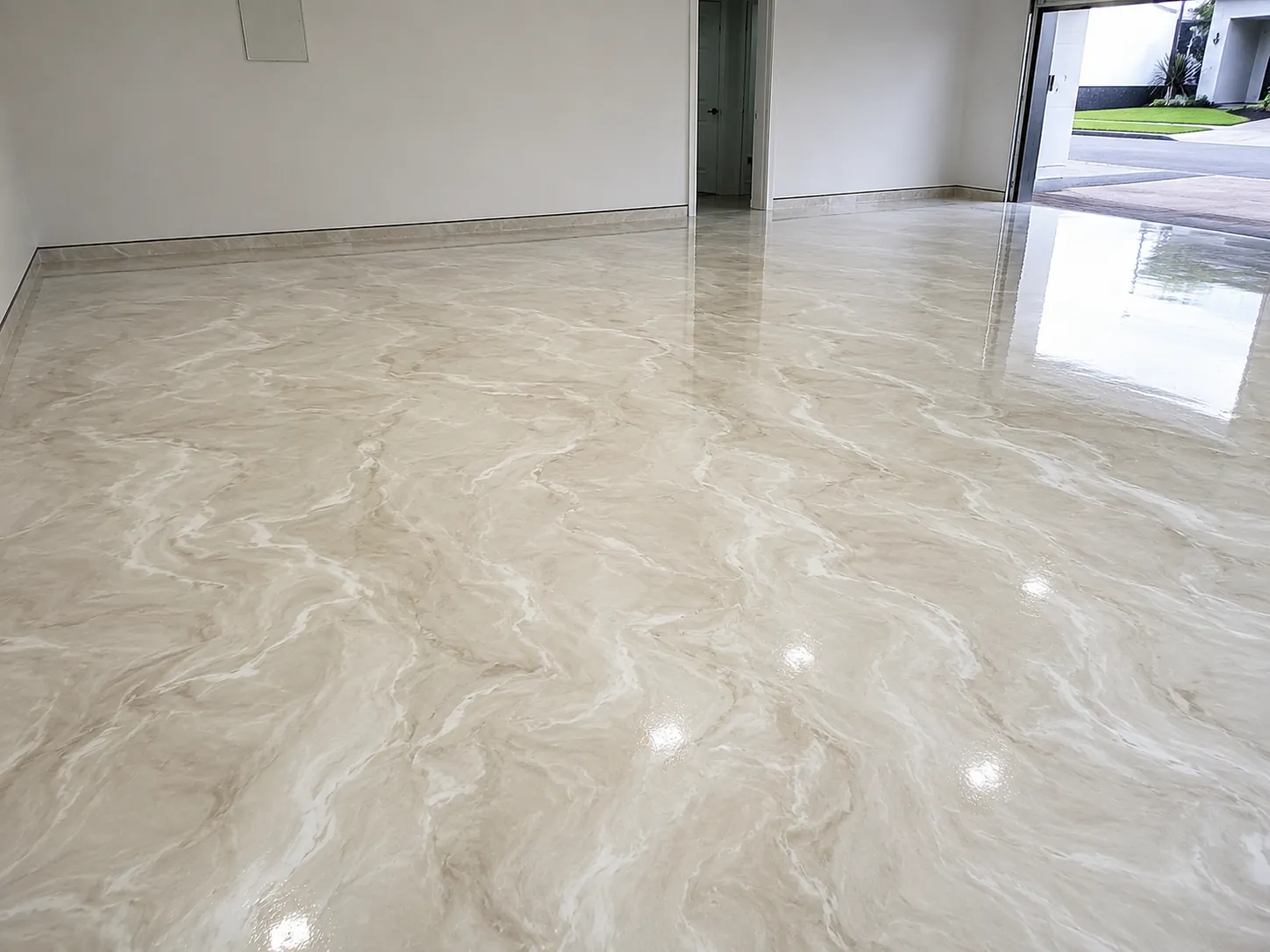
Tiles are the default in many Melbourne bathrooms, laundries and entries, and they sometimes get considered for garages and living areas too. Epoxy is a different kind of floor: a bonded resin system on prepared concrete, with no grout grid and a very different maintenance routine.
If you are choosing between them, it helps to compare the two as finished floors, not only as looks in a photo. This is not about coating over existing tiles (that is a separate question, covered in can you epoxy over tiles). This is about which finish to choose when you are starting from a concrete slab, or ripping up a floor and starting again.
How the two floors are built
Tiles are individual pieces set on adhesive, with grout in the joints. A well-laid tiled floor can look excellent and last a long time, particularly in a bathroom or kitchen where you already like the style. The joints are also the part that stains, cracks or needs work later.
An epoxy floor is a multi-layer coating system on diamond-ground concrete: primer, a colour, flake or metallic coat, and a UV-stable polyurethane topcoat. It becomes a continuous surface. Our comparison of garage floor coatings places epoxy among other resin and paint options. If you are also weighing polished concrete, use our epoxy vs polished concrete garage guide.
Both finishes are hard underfoot. Neither will feel like timber or carpet.
Cleaning and day-to-day use
This is often where the two finishes feel most different.
Tiles themselves wipe clean, but grout collects dirt, soap and, in laundries and entries, grit. Pale grout in a busy room can start to look tired even when the tiles are fine. Narrow or recessed joints are harder to mop properly.
A sealed epoxy surface has no grout. Sweeping and mopping with a pH-neutral cleaner is usually enough, which is why we also recommend it in our cleaning guide. A very glossy epoxy floor can show dust, just as polished tiles can, and a wet gloss surface can be slippery unless texture is added.
In a bathroom or laundry, both options need thought about grip. Textured tiles and textured epoxy topcoats are the practical answers. In a garage, tiles are less common for a reason: vehicle loads, dropped tools, hot tyres and chemical spills are a better match for a bonded resin system than for a tiled finish with grout joints.
Repairs, movement and lifespan
A single cracked tile can often be replaced if you have spares. The risk is that the replacement no longer matches, or that several tiles start to loosen because of movement or a weak adhesive bed.
Epoxy does not give you a single tile to swap. A damaged area is repaired or recoated as a section of the system. Flake floors are easier to blend than metallic ones. A professionally installed epoxy system, over properly prepared concrete, is designed for long-term use and is backed by our 7-year workmanship warranty on Floor Lab work. Preparation is the biggest factor in how any coating lasts, which is why we diamond grind rather than relying on a light clean.
Neither floor likes a moving timber subframe. Tiles on a flexible timber floor can crack at the joints. Epoxy on timber is generally not suitable. If your room is not on concrete, both options may be the wrong conversation, and we will tell you that at the visit.
Looks and design flexibility
Tiles offer almost endless patterns, formats and edges, including features and borders. The trade-off is the grid of joints, and the way that grid dominates a large floor.
Epoxy offers a different design language:
- solid colours for a quiet, continuous look
- flake blends, including our standard Ultra Flake range and premium Hyper Flake range
- metallic finishes that can read like stone or marble, without a tile joint
If you want a marble look in a garage or living space, a metallic epoxy floor can give movement and depth that large-format tiles also aim for, but as one surface rather than a field of pieces. That is a design choice, not a rule that one is always better.
Colour should still be chosen from samples in your light. Our colours page and colour ideas article are a useful starting point for resin finishes.
Cost, fairly compared
We can only be specific about Floor Lab epoxy pricing. A single garage starts from $2,000, a double garage from $2,800, metallic garages from $6,000, and larger areas from $50 per square metre. Those figures include diamond grinding, crack repair, the full system and the 7-year workmanship warranty.
Tile prices vary widely by the tile itself, the adhesive and grout, waterproofing, falls, and the cost of labour to lay them. We will not invent a tile rate here. The fair comparison is a written epoxy quote against a written tiling quote for the same room, with preparation and any demolition spelled out on both sides. Consumer Affairs Victoria recommends getting that scope in writing before you approve work.
If the existing floor is tiled and you are trying to avoid demolition, that is a different decision again. Read can you epoxy over tiles before you assume a coating can skip the removal step.
Which one suits which room?
- Garages and workshops: epoxy is usually the better-purpose finish for vehicles, spills and cleaning.
- Bathrooms: both can work on a suitable concrete slab. Tiles are familiar and easy to detail at walls and wastes. Epoxy can work if grip, falls and wet-area waterproofing are planned properly. See our epoxy bathroom floors guide.
- Living rooms and open-plan areas: epoxy offers a continuous, contemporary surface on concrete. Tiles can also work, especially if you want a specific tile aesthetic. Comfort, rugs and acoustics matter for both.
- Entries and laundries: either can be practical. Grout maintenance versus a continuous coated surface is often the deciding point.
All Purpose Coatings publishes product information for the resin systems we use, which is helpful if you want to understand the epoxy side of the comparison in more detail.
Frequently asked questions
Is epoxy better than tiles?
It depends on the room. Epoxy is usually the more practical choice for a garage. In bathrooms and living areas, both can work on the right slab, and the decision often comes down to grout versus a continuous surface, and the look you want.
Does epoxy look like tiles?
It is not trying to copy a tile grid. Flake and metallic finishes can suggest stone or terrazzo, but the surface is continuous. If you specifically want the look of laid tiles, tiling may be the better match.
Which is easier to keep clean?
A sealed epoxy floor has no grout to scrub. Tiles clean easily, but the joints need regular attention. Glossy versions of either finish can show dust.
How do I get an exact epoxy price?
Every Floor Lab quote follows a free site visit and is written and fixed for the agreed scope. Request your in-person quote or call 0468 159 615.
Get an in-person quote
If you are weighing epoxy against tiles, the next useful step is to have the slab looked at and to see finish samples in your light. Request your in-person quote, or call 0468 159 615, and a Floor Lab specialist will inspect the floor and provide a written comparison of the epoxy options that actually suit the space. Browse finished floors in the gallery or start with garage epoxy flooring.