Can You Epoxy Over Tiles? What to Check First
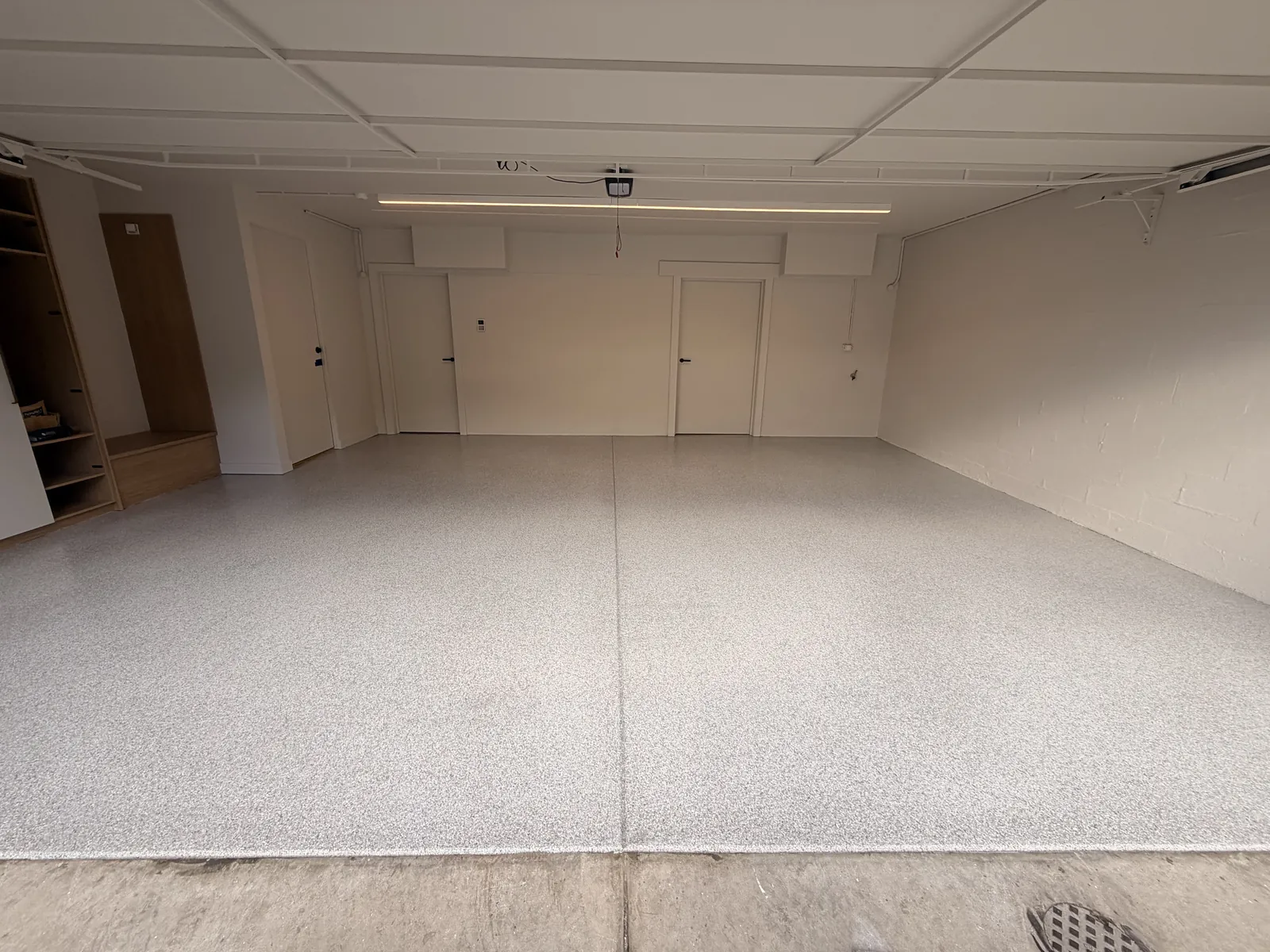
It is a common question during renovations: can you coat an existing tiled floor with epoxy instead of pulling the tiles up? Skipping demolition sounds faster, quieter and cheaper. Sometimes a tiled floor can be assessed for a coating. In many Melbourne homes and garages, removing the tiles and preparing the concrete is the more reliable path.
This guide explains what we look for, why glazed tiles and grout lines cause trouble, and how to decide before you commit.
Why coating over tiles is tempting
Tiles are already there. Lifting them means noise, dust, bin costs and, sometimes, a slab that needs repair once the adhesive comes off. If the tiles look sound, it is reasonable to ask whether a resin system can go over the top.
The catch is that the new coating is only as reliable as whatever it is stuck to. If a tile is loose, hollow or poorly bonded, the epoxy cannot invent a better bond to the slab beneath. That is the same logic as our guide to epoxy over old garage floor paint: a new system should not rely on a weak existing layer.
What can go wrong over tiles
Several issues show up when people try to coat tiles without a proper assessment:
- Grout lines. Recessed grout can telegraph through a thin coating, leaving a grid in the finished surface. Filling every joint adds work, and the filler still has to stay bonded in a wet or trafficked area.
- Glazed surfaces. A shiny tile face is designed to resist staining, which also means coatings do not key to it easily. The surface usually needs thorough mechanical profiling, and even then the bond is to the glaze, not to the concrete.
- Loose or hollow tiles. A tile that sounds hollow when tapped is already failing. Coating it will not fix the void, and the finish can crack or lift in that area.
- Movement. Tiled floors can flex at joints or over timber. Epoxy is a hard coating. Movement that tiles absorbed with grout can show up as cracks in a resin surface.
- Moisture. Water behind tiles, or moisture in the slab, can push against a sealed coating. Bathrooms and external doorways need particular care.
For indoor rooms, our epoxy kitchen floors article already notes that coating over tiles is generally not recommended without a full assessment. The same caution applies in laundries, bathrooms, garages and entries.
When removal is the better option
In most cases we prefer to take the tiles up and diamond grind the concrete. That lets the epoxy bond to the slab, which is what the system is designed to do. It also lets us see cracks, adhesive residue, moisture and any damage that was hidden under the tiling.
Removal is usually the clearer path when:
- any tiles are loose, cracked or hollow
- the floor is over a timber subframe rather than a concrete slab
- the room is a wet area with doubtful waterproofing
- you want a premium flake or metallic finish that will highlight surface defects
- you want a long-term floor, not a cosmetic cover
Preparation after removal follows the same standards as our other work: diamond grinding, repairs and moisture checks. Our comparison of diamond grinding vs acid etching explains why mechanical preparation matters. The Concrete Institute of Australia is a useful independent reference on concrete condition.
When a coating over tiles might be considered
There are situations where a sound, well-bonded tiled floor on concrete can be discussed as a candidate, after an in-person inspection. That still depends on mechanical profiling, how the grout lines will be treated, and whether the finished look is acceptable. It is not a default method, and it is not something we will promise from a photograph.
If the tiles stay, you should expect a written scope that spells out the risks as well as the steps. If we think removal is safer, we will say so. Floor Lab is a premium installer, and we would rather decline a weak substrate than coat over a problem and hope it holds.
What the visit will cover
A free site visit is the only way to make this call. We will:
- identify the substrate under the tiles, as far as it can be determined on site
- tap and inspect tiles for hollow spots and movement
- look at falls, moisture signs and existing damage
- talk through removal versus coating, including access and how clear the room needs to be
- recommend a finish only if the floor is a suitable candidate
Consumer Affairs Victoria has useful guidance on getting building work in writing. Ask any installer for a fixed, itemised quote that states whether tiles will be removed, how the surface will be prepared, and which system will be applied.
Pricing follows the same published starting points as our other work: a single garage from $2,000, a double garage from $2,800, and larger areas from $50 per square metre. Extra preparation, including tile removal, is assessed on site and included in the written quote rather than added as a surprise later.
Frequently asked questions
Can you epoxy directly over ceramic or porcelain tiles?
Sometimes a sound tiled floor on concrete can be assessed, but it is not the standard method. Glaze, grout lines and loose tiles all affect bond and appearance. In many cases the tiles are removed and the slab is prepared.
Will I still see the grout lines?
You might, unless the joints are filled and the coating is built carefully. Even then, movement at the joints can show later. This is one reason removal is often cleaner.
Is it cheaper to coat over the tiles?
Skipping demolition can look cheaper at first. If the coating fails because the tiles were not sound, the repair usually starts with the removal you tried to avoid. An honest quote after a site visit is the only fair comparison.
What should the room look like before you start?
The space needs to be completely clear. Floor Lab does not move furniture, appliances or vehicles. If tiles are being removed, we will explain the mess, noise and access involved before work starts.
Get an in-person quote
We will not tell you to coat over tiles, or to pull them up, until we have seen the floor. Request your in-person quote, or call 0468 159 615, and a Floor Lab specialist will inspect the surface and give you a written recommendation. For a typical garage slab, start with our garage epoxy flooring page, and see finished floors in the gallery.