Self-Levelling Epoxy for Uneven Concrete Floors
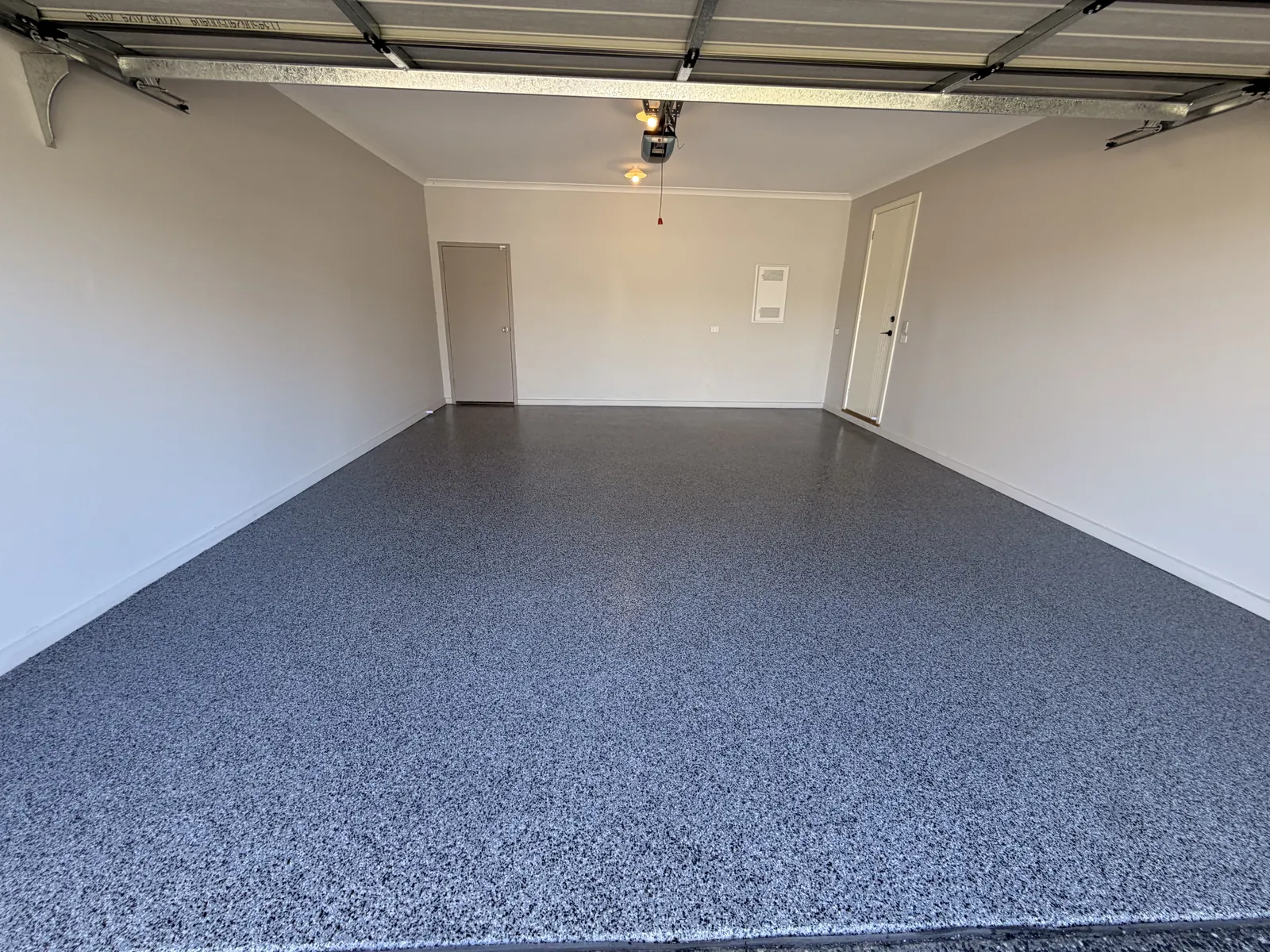
Search for "self-levelling epoxy" and you will see two different ideas mixed together. One is a levelling layer used to flatten dips, ridges and out-of-level concrete before a decorative floor goes down. The other is a flowable epoxy body coat, sometimes marketed as if it will pour itself into a perfectly flat garage.
For Melbourne slabs, the useful question is simpler: is your concrete uneven, and what should happen before an epoxy system is installed? This guide explains how we think about that, and why the right answer starts with an inspection rather than a product name.
Why Melbourne slabs are often uneven
Residential garages, workshops and older interiors are rarely as flat as a showroom photo. Common causes include:
- original falls built in so water can run to the door
- settlement or shrinkage cracks over time
- lips at joints, expansions or where a slab was poured in stages
- leftover adhesive, old coatings or patch repairs
- worn wheel paths or damage around a drain
A floor can still be a good candidate for epoxy even if it is not perfectly level. The job is to decide which irregularities should be ground, which should be filled or levelled, and which are structural issues that a coating cannot fix.
What "self-levelling" usually refers to
The phrase is used loosely, so it helps to separate the layers.
A levelling compound (sometimes cementitious, sometimes a specialist resin) is used to fill lows and create a more even plane after the slab has been cleaned and profiled. It is preparation, not the finished look.
A flowable epoxy coat will find its own level to a degree, but it will also follow the shape of the slab beneath. If there is a 10 millimetre dip in the concrete, a decorative coat will generally still show a dip, even if the surface looks smoother.
That is why we do not treat "self-levelling epoxy" as a magic product that replaces grinding and repair. Diamond grinding removes high spots and opens the concrete so coatings can bond, which we explain in diamond grinding vs acid etching. Levelling work, if it is needed, comes after we understand the highs, lows and moisture condition of the slab.
The Concrete Institute of Australia is a useful independent source on concrete quality, tolerances and moisture. Those issues belong in the quote, not as a variation after the floor is already halfway coated.
What we check on an uneven slab
During a free site visit we look at:
- how far the surface is out of level, and whether that is a problem for the way you use the room
- falls to doors, drains or the driveway, especially in garages that get wet
- cracks, joints and any movement
- moisture, because a levelling layer or coating over a damp slab can fail
- existing coatings, paint or tile adhesive that must be removed first
Moisture testing is covered in our Melbourne garage moisture testing guide. New slabs also need enough time to dry, which we explain in how long to wait before coating new concrete.
If the unevenness is actually a designed fall, we may recommend leaving it. Flattening a garage floor so that water ponds at the door is not an improvement.
How unevenness is usually handled
There is no single recipe, but the sequence is typically:
- Inspect and measure the slab, including moisture.
- Diamond grind to profile the concrete and take down ridges or high lips where that is appropriate.
- Repair cracks and damaged edges.
- Place a levelling or repair material in the lows if the inspection shows it is needed.
- Install the primer, decorative coats and UV-stable polyurethane topcoat.
Flake and metallic finishes will follow the plane you give them. A premium look still needs a thoughtful substrate. If the slab is badly twisted or structurally unsound, we will tell you rather than try to disguise it.
What this means for time and price
Levelling work adds preparation time and material, so it can change both the programme and the quote. Published starting prices still apply as a guide: a single garage from $2,000, a double garage from $2,800, and larger spaces from $50 per square metre. Those figures include diamond grinding and crack repair. Significant levelling, if required, is identified at the visit and written into the fixed quote.
Most residential garages still take one to two days to coat once preparation is complete, but extra repair or levelling can extend that. We will give you a clear sequence before work starts, including when you can walk on the floor and when you can park. The space needs to be clear; Floor Lab does not move vehicles or stored items.
All Purpose Coatings provides product information for the systems we use. If you are comparing quotes, ask whether any levelling is included, how the installer will grind the slab, and what happens if hidden dips or weak concrete show up after the existing surface is removed.
Frequently asked questions
Will self-levelling epoxy make my garage perfectly flat?
Not by itself. A flowable coat follows the slab. High spots are usually ground, and low spots may need a levelling or repair material after an inspection. Some falls should be kept so water can drain.
Is a levelling compound the same as the finished epoxy floor?
No. Levelling is preparation. The finished floor is the epoxy system, often with flakes or a metallic effect, plus a protective topcoat.
Can you coat a badly sloping or damaged slab?
Sometimes, after repairs. If the concrete is unsound or the slope will cause water to pond, we will explain the limits rather than coat over them.
Do I need a site visit for this?
Yes. Unevenness cannot be judged fairly from a photo. A Floor Lab specialist will inspect the slab and include any levelling in a written fixed quote.
Get an in-person quote
If your concrete is uneven, the next step is to have it looked at in person. Request your in-person quote, or call 0468 159 615, and we will assess the slab, explain the preparation it needs, and quote the full system. You can also read about garage epoxy flooring or browse finished floors in the gallery.