Can You Epoxy Over Oil-Stained Concrete?
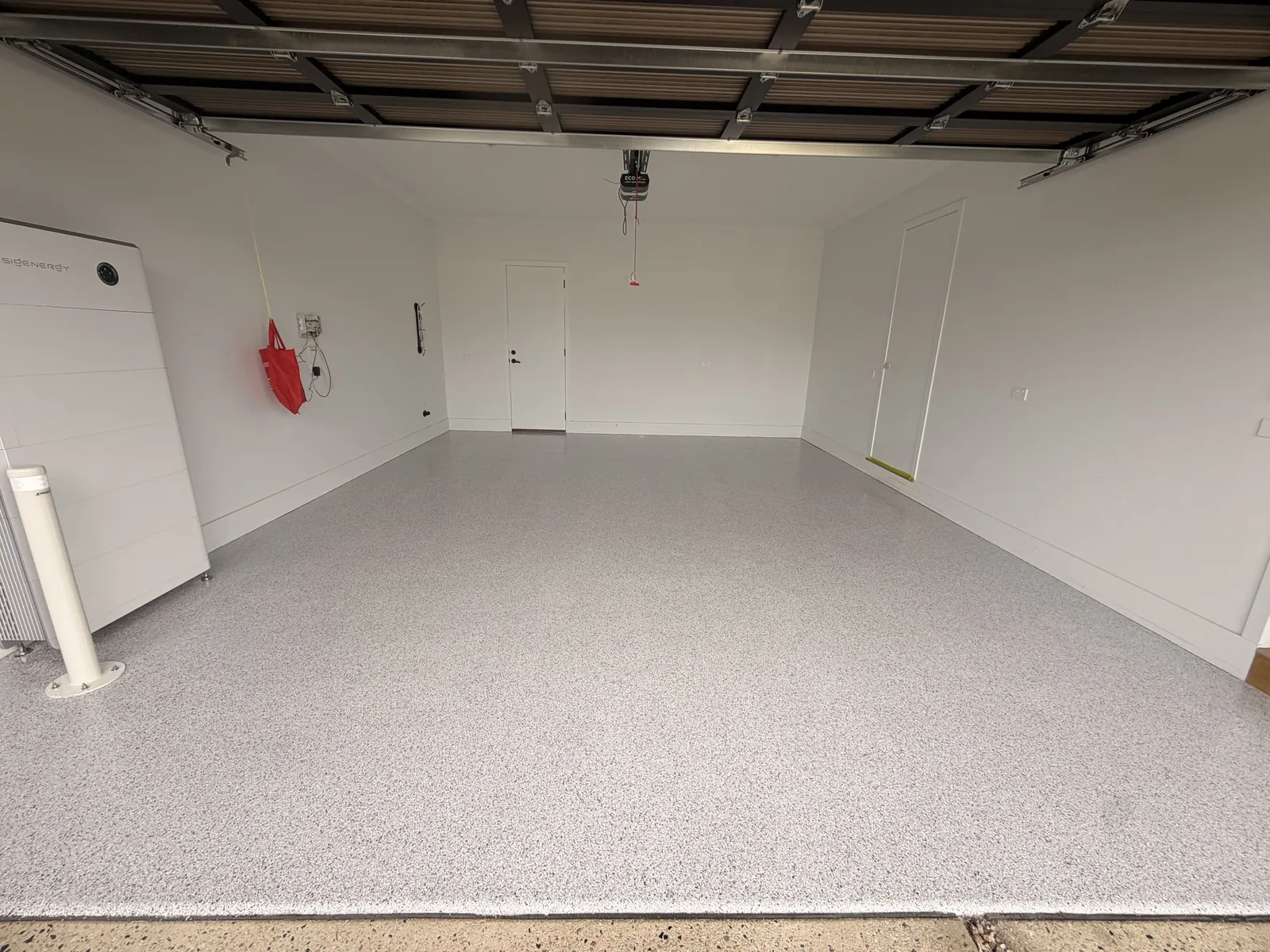
Many Melbourne garages and workshops have oil marks on the slab: a dark patch under the engine, a drip from a motorbike, or staining that has been there for years. It is reasonable to ask whether those marks have to disappear before an epoxy floor can go down, or whether the coating can simply cover them.
Sometimes a stained slab can be prepared and coated. Sometimes the oil has soaked in far enough that the bond is the real issue, not the colour of the stain. This guide explains what we look for, why contamination matters, and how a site visit settles the question.
Why oil is a bonding problem, not just a cosmetic one
Epoxy needs clean, profiled concrete to grip. Oil, grease and some other vehicle fluids can sit in the pores of the slab. If they are still there when a coating goes on, the system may not wet the surface properly. That can show up later as poor adhesion, patchy curing or areas that are more likely to lift.
A dark stain you can still see is a clue, not a complete diagnosis. Light, old marks that have been walked over for years can behave differently from a fresh, wet spill. The only reliable way to tell is to inspect the slab, and often to test how the concrete responds once the surface is opened up. That is the same logic as our guide to epoxy over old garage floor paint: a new system should not rely on a contaminated or weakly bonded layer.
If the question you have is about oil sitting on an already finished epoxy floor, that is a cleaning and maintenance issue, covered in our workshop flooring guide and the garage cleaning routine. This article is about coating a stained slab for the first time.
What we check at the site visit
Quoting is in person only. During the free visit we look at:
- How widespread the staining is, and whether it is still active
- Whether the concrete is dusty, painted, cracked or damp as well as stained
- Whether grinding and degreasing are likely to get us back to a sound profile
- How the room is used, because a workshop that still drips oil needs a system and a cleaning habit that match that use
We also check moisture, because a damp, oily slab is a different problem from a dry one. See moisture testing before epoxy. The Concrete Institute of Australia is a useful independent reference on concrete quality and contamination, which is why we treat these checks as part of the job.
We do not quote a stained garage from a photo alone. A picture helps us prepare, but the bond is decided on the slab.
How oily concrete is prepared
Preparation starts with diamond grinding, not acid etching. Grinding removes the weak surface paste and opens a mechanical profile. On stained areas, additional degreasing or further grinding may be required. In some cases a stain will still be faintly visible in the raw concrete and will be hidden by a primer and a flake or colour coat. In other cases the contamination is too deep, or keeps bleeding, and the honest answer is that the area needs more work, or that a coating is not the right next step until the source of the oil is managed.
We never use acid etching as a substitute for mechanical preparation. Our guide to diamond grinding versus acid etching explains why. Old paint, unsound patches and cracks are dealt with in the same visit and the same written scope. If the slab is also uneven, see self-levelling epoxy for uneven concrete.
All Purpose Coatings publishes product information for the systems we use, including guidance around application over prepared concrete. The manufacturer's data does not replace an on-site assessment of a contaminated garage.
What the finished floor can and cannot hide
A flake system is often a good choice on a previously stained garage, because the blend disguises minor variation in the slab once the coating is down. Ultra Flake is Floor Lab's standard flake range. Hyper Flake is the premium flake range. Metallic finishes can also hide the old concrete, but they still depend on a sound bond underneath. No decorative finish will fix a slab that was not properly prepared.
Once the coating is in place, fresh oil should be cleaned up rather than left to sit. The coating is a sealed surface, which makes spills easier to remove than bare concrete, but it is not a reason to ignore leaks.
Time, cure and price
Most standard residential garages take 1 to 2 days, depending on the slab condition and any crack repair. Metallic garage floors take 3 to 4 days. Extra preparation on stained areas can sit inside the relevant window, or it can extend the work. We confirm the timeline at the site visit.
Light foot traffic is usually safe after 24 to 48 hours, with instructions for your job. Cars can typically be parked after 5 to 7 days. Waiting the full 7 days is the cautious approach. Heavy vehicles should wait 7 to 14 days. Details are in the FAQ and the cure time guide.
A single garage starts from $2,000 and a double garage from $2,800, with metallic garages from $6,000 and larger areas from $50 per square metre. Those starting figures include diamond grinding and a 7-year workmanship warranty. If stained areas need extra preparation, that is itemised in the written quote, typically sent within 24 hours of the visit.
Frequently asked questions
Can you epoxy over oil stains?
Sometimes, yes, after the slab has been assessed and prepared. Light or old staining can often be ground and coated. Heavy or active contamination can prevent a reliable bond. We confirm this at the free site visit.
Will the oil marks still show through the new floor?
A primer plus a flake or colour coat will usually hide the old marks if the contamination has been dealt with. The bigger risk is not a shadow in the finish, it is a weak bond if oil is left in the slab.
Do I need to clean the oil myself before you visit?
Please keep the area safe and wipe up any fresh, wet spills. You do not need to attempt a full degrease yourself. We assess the stain and the preparation on site.
How do I get a quote for a stained garage?
Request your in-person quote or call 0468 159 615. Quotes are in person only, and we typically send the written figure within 24 hours of seeing the slab.
Get an in-person quote
If your garage or workshop slab is oil-stained and you are considering epoxy, the next step is a free site visit so the contamination can be assessed properly. Request your in-person quote, or call 0468 159 615, and a Floor Lab specialist will inspect the concrete and set out the preparation in writing. You can also see finished floors in the gallery or start with garage epoxy flooring.