Concrete Sealer vs Epoxy: Which Suits a Garage?
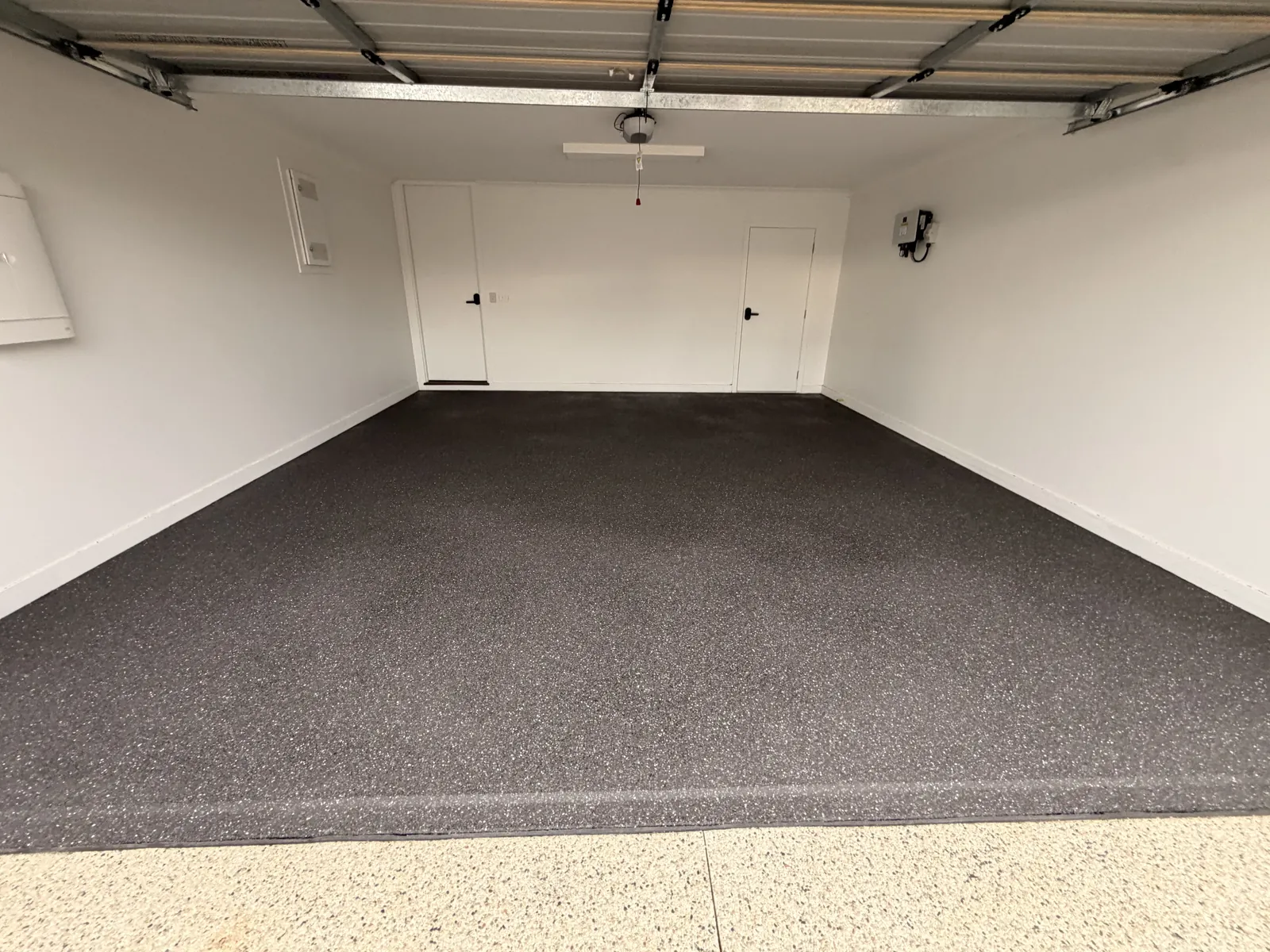
A garage floor sealer and an epoxy floor are often talked about as if they were the same product. They are not. A sealer is usually a thin treatment that soaks into, or sits lightly on, the concrete. An epoxy system is a built coating, applied over diamond-ground concrete, with a primer, a coloured or flake layer and a protective topcoat.
If you have been searching for a garage floor sealer, this guide explains what that option actually does, where a full epoxy system is the better fit, and how to decide without treating either one as a default.
What a concrete sealer is for
A concrete floor sealer is designed to reduce dusting, darken or enrich the slab, and give some resistance to spills. Penetrating sealers stay in the pores. Thin film sealers sit on the surface but do not build the kind of thickness you see in a flake or metallic floor. Many sealers leave the existing colour, stains and trowel marks visible. That can be the look you want in a light-duty space.
Sealers can be a reasonable choice when the garage is used occasionally, the slab already looks acceptable, and you are not expecting the surface to hide tyre dust or old marks. They are also used as part of a polished or honed concrete process, which is a different finish again. Our polished concrete cost guide and the epoxy versus polished concrete comparison cover that path separately.
What a sealer will not usually do is give you a uniform decorative floor, a flake blend, or the same level of film build under daily parking.
What an epoxy garage floor is
An epoxy floor is a system, not a single brush-on product. After we inspect the slab, we diamond grind the concrete, repair cracks where that is appropriate, check for moisture and then apply the specified coats. A standard installation includes a primer, a broadcast or colour coat, and a UV-stable polyurethane topcoat. Ultra Flake is Floor Lab's standard flake range. Hyper Flake is the premium flake range. Metallic systems are specified when you want a decorative, marble-like finish.
That build is what lets an epoxy floor hide minor marks, clean as a continuous surface, and take regular vehicle use when it has been prepared properly. See garage epoxy flooring and our epoxy flake flooring guide for how those systems are put together.
If the option you are comparing is paint rather than a sealer, start with garage floor paint versus epoxy instead. Paint and sealers are sometimes grouped together in round-ups, including our seven garage floor coatings comparison, but they are not the same chemistry.
Preparation is the real difference
A sealer may still need a clean, sound slab. Oil, laitance and old coatings can stop it soaking in or sticking. An epoxy floor depends on a mechanical profile. We diamond grind. We do not acid etch. That preparation, plus moisture testing and crack assessment, is what the coating bonds to.
The Concrete Institute of Australia is a useful independent reference on concrete quality and moisture. If the slab is oily, painted or uneven, those issues have to be dealt with before either a sealer or an epoxy system will perform. Our guides to epoxy over old paint and diamond grinding versus acid etching explain two of the common slab problems.
Cleaning, appearance and how long the floor is meant to work
A sealed slab is still essentially concrete. Dust, tyre marks and spills sit on a thin treatment, and worn paths can show first in the traffic lanes. An epoxy flake floor is easier to sweep and mop as a single surface, and the flake pattern disguises everyday dust better than a flat, clear sealer.
No floor is maintenance-free. A well specified epoxy system is designed for regular garage use, and completed Floor Lab floors are backed by a 7-year workmanship warranty covering delamination, peeling and coating failure caused by the installation process. It does not cover damage from improper maintenance, physical impact, or use before the curing period has passed. Sealer products have their own product warranties, which are set by the manufacturer, not by an installation system of this kind.
All Purpose Coatings publishes product information for the epoxy and flake systems we use. When you compare a sealer quote with an epoxy quote, ask what preparation is included, how thick the system is, and what is actually warranted.
Time on site, cure and price
Most standard residential garages take 1 to 2 days, depending on the slab condition and any crack repair. Metallic garage floors take 3 to 4 days. We confirm the timeline at your free site visit. Light foot traffic is usually safe after 24 to 48 hours, with instructions for your job. Cars can typically be parked after 5 to 7 days. Waiting the full 7 days is the cautious approach. Heavy vehicles should wait 7 to 14 days. See the FAQ for those cure stages.
A single garage starts from $2,000 and a double garage from $2,800, with metallic garages from $6,000 and larger areas from $50 per square metre. Those starting figures include diamond grinding and the 7-year workmanship warranty. A sealer may have a lower materials cost, but the two quotes are only comparable when preparation and expected use are written down.
Frequently asked questions
Is a garage floor sealer the same as epoxy?
No. A sealer is a thin treatment that reduces dust and can enrich the look of the slab. Epoxy is a built coating system with a primer, a colour or flake layer and a topcoat, applied over diamond-ground concrete.
Can I put epoxy over a sealer later?
Only if the existing sealer can be removed or profiled so the new system can bond to sound concrete. That has to be checked on site. Do not assume a sealer is a useful primer for epoxy.
Which option hides stains and tyre dust better?
A flake epoxy floor will generally hide everyday marks better than a clear or lightly tinted sealer, because the sealer leaves more of the original slab visible.
How do I get an exact epoxy price?
Quotes are in person only, after a free site visit. We typically send a written quote within 24 hours of seeing the slab. Request your in-person quote or call 0468 159 615.
Get an in-person quote
If you are weighing a concrete sealer against an epoxy garage floor, the useful next step is to have the slab inspected and to see finish samples in your light. Request your in-person quote, or call 0468 159 615, and a Floor Lab specialist will recommend the system that actually suits the space. Browse finished floors in the gallery or start with garage epoxy flooring.