Epoxy Bathroom Floors in Melbourne: What to Know
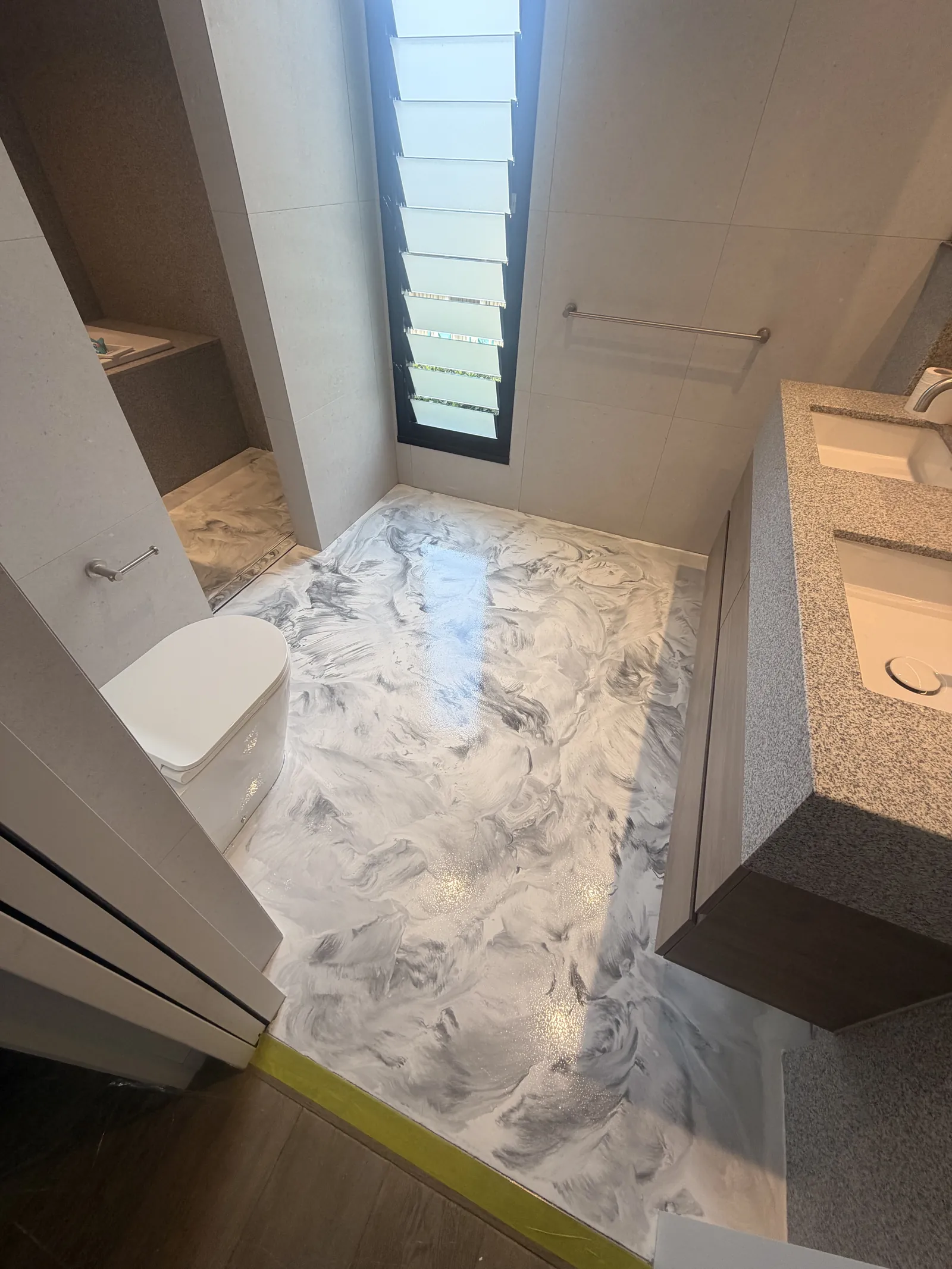
Epoxy is usually discussed as a garage or warehouse finish, but Melbourne homeowners also ask about it for bathrooms. A resin floor has no grout lines to scrub, it can be finished in a soft metallic or a finer flake, and it is easy to wipe down. It is also a hard, specialised coating, and a bathroom is a wet area with rules that a garage does not have.
This guide explains when an epoxy bathroom floor can work, what it cannot replace, and what to check before you plan one.
Why people consider epoxy in a bathroom
Bathrooms are cleaned often, they see water, and grout is a common frustration. A coated concrete floor can offer:
- a continuous surface with no tile joints to discolour
- a wide choice of looks, from calm solid colours to marble-like metallics
- straightforward day-to-day cleaning with a suitable neutral cleaner
- a chance to run the same finish into an ensuite, powder room or adjoining space
Those benefits only apply if the floor underneath is a sound concrete slab, and if grip, falls and wet-area detailing are planned properly. Our epoxy kitchen floors guide and epoxy laundry floors guide cover similar indoor questions in those rooms. A bathroom adds more water, more bare feet and, in many homes, a shower that has its own waterproofing requirements.
The slab comes first
Epoxy systems are designed to bond to properly prepared concrete. Many older Melbourne houses have timber bathroom floors, or a mix of substrates after renovations. Timber moves with temperature and humidity, so it is generally not a suitable base for a standard epoxy floor.
If there is a concrete slab, the existing finish still needs assessing. Tiles, adhesive, old membranes and paint may need to be removed. The concrete is then diamond ground, cracks and joints are repaired, and moisture is checked. Rising moisture can cause coatings to blister, which is why the approach in our moisture testing guide matters indoors as well as in garages.
Renovations and new builds are often the simplest time to coat a bathroom floor, because fixtures can be planned around the work and the slab can be prepared before vanities go back in. If the slab is new, read how long to wait before coating new concrete.
Waterproofing is a separate requirement
This is the point that is easy to miss. An epoxy floor finish is not a substitute for the wet-area waterproofing that a bathroom may require, especially in a shower recess. Falls to the waste, wall-to-floor junctions, and any membrane system need to be correct for the room. Floor Lab will assess the floor as a coating surface. We will also tell you if the area needs other building work before a resin finish is a sensible idea.
Shower floors are more demanding than a vanity area or a powder room. They stay wet, they need reliable drainage, and they are used barefoot. Some shower areas are better served by a system designed as a wet-area substrate, rather than by treating them as a simple decorative coat. That decision has to be made on site, not from a photo.
Slip resistance is not optional
A high-gloss finish can be slippery with water, soap or spilled shampoo. For bathrooms we plan texture in the topcoat so the floor has grip under wet feet. The level of texture is a balance: more grip helps safety, while a finer texture is easier to keep clean.
Our anti-slip epoxy flooring guide explains how that texture is built and how Australian slip-resistance thinking, including AS 4586, comes into commercial and wet-area discussions. WorkSafe Victoria also publishes guidance on preventing slips, which is useful context if the bathroom is in a workplace, rental or other shared setting.
Finish options that suit a bathroom
The right look depends on the room and how it is lit:
- Metallic finishes can give a soft, stone-like movement that suits a bathroom or ensuite. Each floor is unique because the pigments move during application. See our metallic epoxy flooring page if that is the look you want.
- Flake finishes, including our standard Ultra Flake range and premium Hyper Flake range, add texture and help hide watermarks. Finer blends often read more calmly in a small room.
- Solid colours are clean and simple. Lighter colours brighten a small bathroom but show residue more readily.
Ask to see samples in the actual room. Downlights, a window and a white vanity will all change how a colour reads. All Purpose Coatings publishes the colour charts we use for metallic, flake and solid finishes.
What installation involves
A typical bathroom coating follows a similar sequence to other indoor floors: inspect the slab and existing finish, protect or remove fittings as agreed, diamond grind, repair, prime, apply the decorative coats, then apply a textured, UV-stable polyurethane topcoat where needed.
The room will be out of action while the system cures. Light foot traffic is usually possible after 24 to 48 hours, but your installer should give you a schedule for your job. Bathroom fittings, silicone joints and any remaining trades need to be sequenced so nobody walks a new floor too early or seals over a surface that still needs to cure.
Space has to be clear before work starts. Floor Lab does not move vanities, toilets or stored items.
Caring for an epoxy bathroom floor
Sweep or vacuum grit, wipe spills, and mop with a pH-neutral cleaner. Avoid harsh solvents and abrasive scourers. If sand from the beach or garden is walked in, get it off the surface so it does not wear the topcoat. Our epoxy floor cleaning guide applies to indoor floors as well.
Frequently asked questions
Can you put epoxy on a bathroom floor?
Yes, if the bathroom has a sound concrete slab that can be properly prepared, and if grip and wet-area detailing are planned. Epoxy is generally not suitable over timber subfloors.
Can epoxy replace tiles in a shower?
A shower recess has specific falls and waterproofing requirements. An epoxy finish is not a substitute for required wet-area waterproofing. Some shower areas need a different approach, which we will discuss after seeing the room.
Is an epoxy bathroom floor slippery?
A smooth gloss finish can be slippery when wet. Texture can be added to the topcoat to improve grip, which is important in bathrooms.
How much does a bathroom epoxy floor cost?
Pricing depends on the size of the area, the condition of the slab and the finish. Larger epoxy areas start from $50 per square metre, and we confirm the figure after a free site visit. We do not quote from photos alone.
Get an in-person quote
Bathrooms vary too much for a phone quote. Request your in-person quote, or call 0468 159 615, and a Floor Lab specialist will inspect the slab, explain what a coating can and cannot do, and give you a written scope. You can also browse recent floors in our gallery or start with our garage epoxy flooring overview if you are planning more than one room.